
Quick answer
After hail or high winds in Dallas–Fort Worth, document visible damage safely and arrange a professional inspection before making repair or insurance decisions.
A North Texas storm can leave obvious damage behind - missing shingles, bent gutters, broken screens - but the more costly problems are often harder to spot. Hail bruises shingles without punching a visible hole. Wind can loosen flashing or lift shingles just enough to create a future leak. To prepare a storm insurance claim well, start by protecting the property, documenting what you can safely see, and getting a qualified inspection before small damage turns into interior repairs.
The goal is not to guess what your policy will cover. It is to give your insurer a clear, accurate record of the storm-related damage and make informed decisions about repairs. A careful process also helps prevent a rushed contractor decision when every roofer in town seems to be knocking on doors.
Start With Safety and Temporary Protection
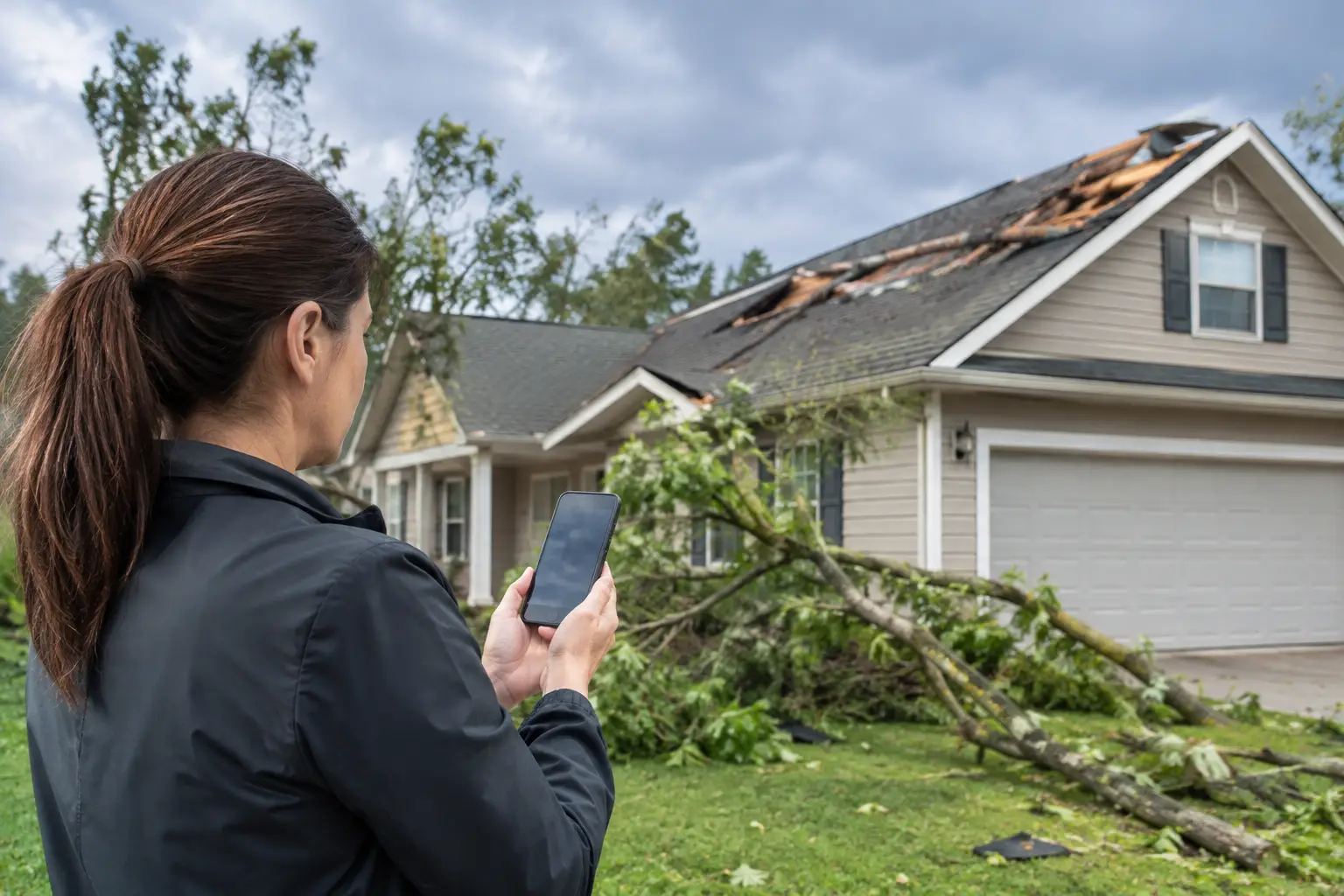
Do not climb onto a roof after a storm. Wet shingles, loose debris, damaged decking, and downed power lines create real hazards. Walk the property from the ground if conditions are safe, and look for shingles in the yard, dented metal components, damaged gutters, torn window screens, fallen branches, and water entering the home or building.
If water is coming inside, take reasonable steps to limit additional damage. Move furniture and valuables, place containers under active drips, and photograph the affected area before cleanup when possible. Emergency tarping or other temporary protection may be necessary, especially if the roof has an opening. Keep records and receipts for emergency work, materials, and mitigation services. Your policy may require you to prevent further damage after a loss.
For commercial properties, check roof drains, scuppers, and visible drainage paths from safe access points. Standing water on a low-slope roof can worsen quickly when drainage is blocked. Do not send untrained staff onto the roof to investigate.
Document the Damage Before It Changes
Storm evidence does not stay in place. Wind can scatter debris, rain can wash away granules, and temporary repairs can cover the original condition. Take clear photos and short videos as soon as it is safe to do so. Include wide shots that show the property and close shots that show individual damage.
Photograph exterior elevations, roof edges visible from the ground, gutters, downspouts, fences, HVAC equipment, screens, skylights, siding, and any fallen limbs. Inside, document ceiling stains, wet insulation, peeling paint, warped flooring, or other signs of water intrusion. If an item is wet, take a photo before removing or drying it.
Create a simple written timeline while the details are fresh. Note the date and approximate time of the storm, what you observed, when leaks began, and any emergency steps you took. Save weather alerts, contractor reports, invoices, and communication with your insurer in one folder. A well-organized file makes the adjuster meeting and any follow-up much easier.
Get a Professional Roof Inspection
A ground-level review cannot confirm the full condition of the roofing system. Hail damage, wind creases, punctures, displaced flashing, and compromised seals around vents may only be visible during a close inspection. A professional roofer can assess the roof, gutters, penetrations, and related exterior components and document the findings in language that is useful for a claim.
An inspection is not a promise that insurance will approve a claim. Coverage depends on your policy, deductible, exclusions, age-related provisions, prior damage, and the insurer's assessment. It does, however, help you understand whether there is storm-related damage worth reporting and what repairs should not wait.
For homeowners in Dallas, Fort Worth, Plano, or Flower Mound, local experience matters. North Texas roofs are regularly exposed to hail, high winds, intense sun, and sudden downpours. A contractor familiar with these conditions can distinguish between storm damage, normal aging, installation issues, and maintenance concerns without oversimplifying the answer.
Review Your Policy Before You File
Find your declarations page and review the essentials: your deductible, the type of coverage, and any special provisions for wind or hail. Some policies pay actual cash value first, while others may provide replacement cost benefits after covered work is completed and required documentation is submitted. The difference can affect both your out-of-pocket planning and the timing of payments.
Also look for deadlines. Policies commonly require prompt notice of a loss, but prompt does not mean filing a claim based on a quick visual guess. If there is no emergency, an inspection can help you report accurate information rather than describe damage you cannot verify.
When you call your carrier, stick to the facts. Share the storm date, the damage you observed, and whether there is active leaking or temporary protection in place. Ask for the claim number, adjuster contact information, the inspection process, and any documentation the carrier wants before the appointment. Write down the name of each representative and the date of every conversation.
How to Prepare a Storm Insurance Claim Meeting
The adjuster inspection is an important opportunity to make sure the property is evaluated thoroughly. Have your claim number, policy information, photos, timeline, emergency repair receipts, and contractor inspection documentation ready. Clear access to the attic, garage, interior leak areas, and exterior of the property can prevent delays.
If your roofing contractor offers claim support, ask whether a representative can be present during the adjuster visit. The contractor does not decide coverage, and should not pressure the adjuster to approve work. Their role is to identify observed damage, explain roofing components, and help ensure the scope reflects necessary storm-related repairs.
This is especially helpful when damage involves more than shingles. Flashing, ridge materials, vents, gutters, downspouts, roof decking, and code-required components may all need consideration depending on the condition of the system and the approved scope. A detailed conversation on site is usually more productive than trying to resolve technical questions through photos alone.
After the inspection, request and read the insurer's estimate carefully. Compare the listed materials, quantities, repair methods, and line items with the contractor's findings. If something appears missing or unclear, ask questions. A legitimate supplement process may be appropriate when covered damage or required work was not included in the original estimate, but no contractor can guarantee that an insurer will change its decision.
Avoid the Mistakes That Create Claim Problems
The most common problem is waiting until a minor issue becomes a major interior loss. Another is signing a contract before understanding the scope of work, payment terms, and your insurance settlement. Be wary of anyone who promises to waive your deductible, guarantees claim approval, or asks for a large payment before providing clear documentation.
Avoid making permanent repairs before the adjuster has a chance to inspect unless immediate work is necessary to protect the property. Temporary measures are different. If emergency repairs cannot wait, photograph the damage first, save receipts, and keep any removed materials if practical.
It is also wise to separate insurance questions from roofing decisions. Your insurer determines coverage. Your contractor should provide a clear proposal, explain material options, identify warranty terms, and tell you what work is needed to restore the roof correctly. If the approved amount does not match the condition of the roof, ask for an explanation rather than assuming either side is automatically wrong.
Choose Repairs That Protect the Whole System
Storm restoration is not only about replacing visible shingles. A roof performs as a system, with underlayment, flashing, ventilation, penetrations, edge protection, and drainage all working together. If gutters were dented, pulled loose, or overwhelmed by runoff, address them as part of the restoration plan. Damaged gutters can send water toward the foundation, landscaping, and exterior walls long after the roof work is complete.
Material selection depends on the building, roof design, budget, insurer-approved scope, and long-term goals. A homeowner planning to stay in the house may prioritize upgraded shingle performance and a stronger warranty. A property owner preparing to sell may have different priorities. Commercial buildings require an assessment of the existing low-slope system, drainage, seams, and penetrations rather than a residential-style solution.
Reilly Roofing and Gutters can inspect storm damage, document roofing conditions, and provide practical support during the adjuster process for DFW property owners. The right next step is a no-cost, no-obligation inspection that gives you a clearer picture before you make a claim or commit to repairs.
A storm claim does not have to become another full-time job. Keep the evidence, ask direct questions, and work with professionals who can explain what they see. That steady approach gives your property the best chance of being repaired properly when the weather clears.
Local roofing help
Need storm damage repair in Dallas–Fort Worth?
Reilly Roofing and Gutters can inspect the issue, explain the practical options, and connect you with the Reilly office that serves your area.
Common questions
About Storm & Hail Damage
What should I do first after hail in Dallas–Fort Worth?
Stay off the roof, photograph visible damage from the ground, note the storm date, and arrange an inspection. Save receipts for any emergency work needed to prevent additional damage.
Can a roof have hail damage without an active leak?
Yes. Hail can bruise shingles, dislodge granules, or damage vents and flashing before water reaches the interior. An inspection can identify those conditions while evidence is still clear.
Can a roofer guarantee an insurance claim will be approved?
No. Coverage decisions belong to the carrier. A roofing contractor can document visible conditions, explain a repair or replacement scope, and be available during the adjuster visit when appropriate.